Strategy Lab

Fibonacci Betting in Aviator: Bankroll Impact & Risk Analysis

Learn how the Fibonacci betting strategy affects your bankroll in Aviator. Understand volatility, drawdown risks, and practical tips to manage losses in this crash game.

Fibonacci Betting Strategy in Aviator: How It Affects Your Bankroll

The Fibonacci betting strategy is a progressive betting system applied to crash games like Aviator, where bet sizes increase according to the Fibonacci sequence after losses. This strategy addresses how players manage bankroll volatility when using a mathematical progression to recover losses, but it does not guarantee profits or eliminate the house edge. Understanding its impact on bankroll drawdown and risk is essential for players considering this approach.

Aviator crash point insider chart showing game statistics and betting insights for the Aviator crash game on a blog site.

Understanding the Fibonacci Sequence in Aviator Betting

The Fibonacci sequence is a series of numbers where each number is the sum of the two preceding ones: 0, 1, 1, 2, 3, 5, 8, 13, 21, 34, and so on. In Aviator betting, players apply this sequence to determine bet sizes after losses. The standard progression works as follows:

  • After a loss, move to the next number in the sequence and bet that amount.
  • After a win, move back two steps in the sequence and bet that amount.
  • If you win at the beginning of the sequence, restart from the first bet.
  • This system is a loss-chasing strategy, meaning it aims to recover previous losses through increased bets. However, it is important to note that Fibonacci does not alter the underlying odds of Aviator, where crash points are random and independent. The strategy relies on short-term variance to achieve a win before a prolonged losing streak exhausts the bankroll.

    Bankroll Volatility and Drawdown with Fibonacci Progression

    The Fibonacci progression increases bet size rapidly after consecutive losses, leading to significant bankroll volatility and drawdown risk. For example, starting with a base bet of $1:

  • After 5 consecutive losses, the next bet is $8.
  • After 10 consecutive losses, the next bet jumps to $89.
  • After 12 consecutive losses, the bet reaches $233.
  • This exponential growth highlights the potential for rapid bankroll depletion. In Aviator, where crash points are unpredictable, extended losing streaks are possible, amplifying the risk. Drawdown—the maximum loss from peak to trough during a session—can exceed 80% of the bankroll if a losing streak continues beyond 10 rounds.

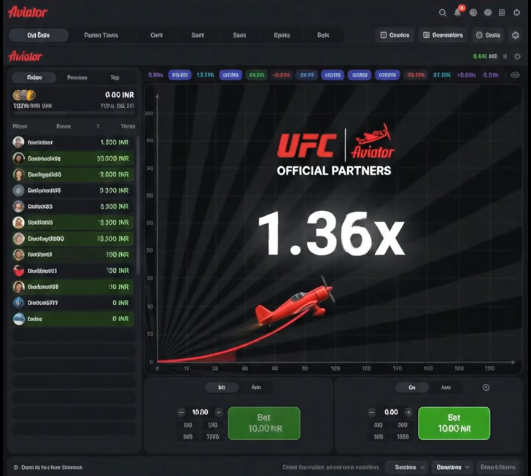
    A screenshot of the Aviator crash game interface showing a recent round result with a low crash multiplier, highlighting the crash point indicator for insider analysis on a blog post.

    Fibonacci vs. Martingale: Bankroll Risk Comparison

    Aspect Fibonacci Martingale
    Progression speed Slower (e.g., 1, 1, 2, 3, 5, 8…) Faster (doubles after each loss: 1, 2, 4, 8…)
    Bankroll requirement for 10-loss streak ~$233 (starting at $1) ~$1,023 (starting at $1)
    Drawdown risk Moderate to high; slower growth allows more losses before large bets Very high; rapid doubling leads to quick exhaustion
    Recovery potential Requires a win within the sequence to recover losses Requires a win to recover all losses, but bet size grows faster
    Suitability for small bankrolls Low; still requires substantial bankroll relative to base bet Very low; high risk of ruin within few losses

    Both systems fail against the house edge over time, but Fibonacci's slower progression can feel less aggressive. However, the risk of bankroll ruin remains significant, especially in a high-volatility game like Aviator.

    Practical Tips to Mitigate Bankroll Damage When Using Fibonacci in Aviator

    To reduce the risk of severe bankroll damage when applying Fibonacci in Aviator, consider the following strategies:

  • Set a strict stop-loss limit: Cap consecutive losses at 5–7 rounds to avoid deep drawdown. For example, if you lose 7 times in a row, end the session regardless of the next bet size.
  • Use a small base bet: Limit the base bet to 0.5% of your total bankroll. For a $200 bankroll, start with $1. This allows for a longer progression without risking ruin.
  • Combine with a fixed cash-out strategy: Always cash out at a consistent multiplier, such as 1.5x or 2x. This reduces variance and makes the progression more predictable, though it does not eliminate risk.
  • Avoid high-volatility sessions: Consider lower-risk bet sizing or shorter sessions to minimize exposure to extended losing streaks.
  • Track session performance: Monitor your bankroll health and adjust the base bet size downward if you experience a significant drawdown.
  • Aviator crash point insider graphic showing a dramatic airplane crash moment with a rising multiplier and a red arrow pointing to the exact crash point on a dark background, 522x449 pixels, designed for blog content about game strategy.

    Common Pitfalls and Why Fibonacci May Not Suit All Bankroll Sizes

    Several misconceptions and practical issues make Fibonacci unsuitable for many players:

  • Myth of guaranteed recovery: Fibonacci only recovers losses if a win occurs before the bankroll is exhausted. If a losing streak exceeds the sequence length supported by your bankroll, you face near-total loss.
  • Gambler's fallacy: Assuming a win is "due" after a losing streak is incorrect. Aviator's crash points are independent events; past outcomes do not influence future results.
  • Bankroll size mismatch: Fibonacci requires a large bankroll relative to the base bet. For a base bet of $1, a bankroll of at least $100 is recommended to survive a 10–12 loss streak. Smaller bankrolls risk rapid depletion.
  • Emotional pitfalls: Chasing losses with increasing bets can lead to tilt and irrational decisions, such as deviating from the strategy or increasing base bets impulsively.

Fibonacci is best suited for players with a large bankroll and high risk tolerance. Small or medium bankrolls should avoid progression systems altogether, as the risk of ruin outweighs any potential short-term gains.

Conclusion

The Fibonacci betting strategy affects bankroll management in Aviator by increasing volatility and drawdown risk. While its slower progression compared to Martingale may seem less aggressive, it still carries significant risk of bankroll depletion during extended losing streaks. No betting system overcomes the house edge; Fibonacci is a risk management tool, not a profit strategy. Players should test the system with a demo or small stakes before real-money use and always prioritize bankroll preservation over chasing losses.

FAQ (Frequently Asked Questions)

Does the Fibonacci betting strategy guarantee profits in Aviator?
No. The Fibonacci sequence does not eliminate the house edge or ensure long-term profits. It is a progression system that aims to recover losses, but its success depends on short-term variance and bankroll size.

How much bankroll do I need to safely use Fibonacci in Aviator?
A common recommendation is to have at least 100 times your base bet. For example, if your base bet is $1, a bankroll of $100 allows for a losing streak of about 10–12 rounds before hitting the sequence limit (e.g., bet $89 on the 11th loss).

What is the main risk of using Fibonacci in crash games like Aviator?
The primary risk is rapid bankroll drawdown during extended losing streaks. Since Aviator's crash points are random, a streak of 10+ losses can lead to bets that exceed 80% of your bankroll, risking near-total loss.

Can I combine Fibonacci with a cash-out strategy to reduce risk?
Yes. Cashing out at a fixed multiplier (e.g., 1.5x or 2x) can reduce variance and make the progression more predictable. However, this does not eliminate the risk of losing streaks or the house edge.

Is Fibonacci better than Martingale for bankroll preservation?
Fibonacci has a slower progression speed, which may allow for longer losing streaks before hitting bet limits. However, both systems carry significant bankroll risk and are not recommended for players with small or medium bankrolls.

Leave a Reply

Your email address will not be published. Required fields are marked *