
Key Takeaways
1. The combination of a client seed and server seed, processed through SHA-512 hashing, creates a unique, cryptographically independent outcome for each round that cannot be predicted or manipulated by operators.
2. Statistical distributions observed in historical dashboards, such as Pareto and Weibull patterns, describe aggregate behavior over thousands of rounds but do not—and cannot—predict individual results due to the fundamental independence guaranteed by provably fair hashing.
3. Misinterpreting short-term historical clusters as predictive patterns is a cognitive error that leads to flawed betting strategies; the law of large numbers confirms that these clusters dissolve into expected probabilities over sufficient sampling.
The Core Announcement: Why Seed Combination Matters More Than Ever
Recent discussions in crypto gambling communities have intensified around the mechanics of provably fair systems, particularly the relationship between client seeds and server seeds. Industry developments, including increased transparency requirements from gaming authorities and the rise of independent verification tools, have pushed this technical mechanism into the spotlight.
The fundamental principle remains unchanged: a round's outcome derives from a hash computed from the concatenation of the client seed and server seed. However, many players still misunderstand how this combination prevents operator manipulation and why historical dashboards cannot reveal predictive patterns. This article examines the cryptographic reality behind the claims.

How Combining Two Seed Strings Prevents Operator Manipulation
The Cryptographic Handshake: What Happens When Seeds Combine?
When a player initiates a round, the system generates a unique hash by combining the player's client seed with the operator's server seed through SHA-512. This process creates a third output that neither party can predict or influence unilaterally. The server seed is committed to the player before the round, typically through a hash commitment, ensuring the operator cannot change it after seeing the client seed.
This mechanism eliminates the most common manipulation vector: the operator cannot retroactively alter outcomes because the server seed was locked in before the round began, and the player must verify the commitment matches the revealed seed. The client seed provides player agency, while the server seed ensures integrity—together, they create a tamper-proof outcome generation system (see Prove It: Step-by-Step Aviator Fairness…).
Is the SHA-512 Hash Alone Sufficient to Guarantee Fairness?
SHA-512 hashing alone provides cryptographic security, but its fairness guarantee depends on proper implementation. The hash must be computed correctly, the seeds must be truly random (not predictable by either party), and the commitment phase must be verifiable. If any of these three conditions fails, the system becomes vulnerable.
Players should verify that the operator publishes the SHA-512 hash of the server seed before rounds begin. Without this commitment, the operator retains the ability to choose a server seed that produces favorable outcomes after seeing the client seed. The combination of hash commitment and seed concatenation creates a system that is computationally infeasible to reverse-engineer or manipulate.
What Are the Common Implementation Failures That Break Security?
Implementation failures typically fall into three categories: weak seed generation, improper commitment protocols, and insufficient randomness. Weak seed generation occurs when operators use predictable sources like timestamps or sequential numbers. Improper commitment means the server seed hash is not made available before rounds. Insufficient randomness arises when client seeds are limited to a small set of possibilities, making brute-force attacks viable.
These failures are rare among reputable operators but not unknown. Independent audits and open-source verification tools have identified such vulnerabilities in smaller, less transparent platforms. Players using provably fair systems should always verify commitments and test for weak seed patterns.
Understanding Statistical Distributions in Historical Dashboards
Pareto and Weibull Distributions: What They Actually Describe
Pareto and Weibull distributions frequently appear in historical dashboards, describing the probability of extreme events versus common outcomes. A Pareto distribution shows that high-multiplier events (e.g., 100x or higher) occur much less frequently than low-multiplier events, following a power-law decay. The Weibull distribution models the time interval between events of a given magnitude—essentially, how long a player might wait between consecutive high-multiplier outcomes.
These distributions are descriptive, not predictive. They summarize what has already happened across thousands of rounds, but they cannot forecast what the next round will produce. A player observing a Pareto distribution in a crash game dashboard is seeing the mathematical signature of a random process with fixed probabilities, not a pattern to exploit.
| Distribution | What It Describes | Why Players Misinterpret It |
|---|---|---|
| Pareto | Frequency of outcomes by magnitude; rare events are rare | Assume rare events are "due" after a long absence |
| Weibull | Time intervals between events of a given size | Assume clusters or gaps indicate "hot" or "cold" streaks |
| Normal (Gaussian) | Bell-curve distribution of outcomes around mean | Assume breaks from the bell curve signal manipulation |
Why Do Clusters Appear in the Data If Each Round Is Independent?
Clusters—apparent streaks of high or low multipliers—are inevitable outcomes of random processes sampling from a stable distribution. The law of large numbers ensures that these clusters dissolve over sufficient sampling, but short sequences (100–1000 rounds) routinely produce visual patterns that appear meaningful, as covered in Can Markov Chains Predict Aviator Crash….
This is a well-documented statistical phenomenon: random walks produce clusters, runs, and apparent trends that vanish when analyzed over larger samples. The human brain is wired to detect patterns, even where none exist. Historical dashboards showing clusters are not evidence of operator manipulation or predictive opportunity—they are evidence that random processes naturally generate local deviations.
What Is the Law of Large Numbers and Why Does It Contradict Pattern Play Theory?
The law of large numbers states that as the number of trials increases, the observed outcomes converge toward the expected probability. For a crash game with a 50% chance of crashing below 2x, one thousand rounds might show 53% below 2x, but ten thousand rounds will converge closer to 50%. This convergence guarantees that short-term clusters are transitory.
Pattern play theory—the belief that historical outcomes predict future results—directly contradicts this law because each round is independent. The law of large numbers applies to aggregate proportions, not to individual round prediction. There is no mechanism by which past outcomes can influence a provably fair SHA-512 hash.
The Cryptographic Independence of Each Round
How SHA-512 Hashing Guarantees Isolation Between Consecutive Rounds
Each round begins with a new combination of client seed and server seed, producing a unique hash that is independent of all previous hashes. SHA-512 is a one-way function with no memory: the output of round N provides no information about round N+1. Even if a player could observe all past outcomes and seeds, they could not compute the next hash.
This cryptographic isolation means no sequence exists to be predicted. There is no hidden "pattern" connecting round 100 to round 101 because the hash function treats each round's seeds as fresh input. The only way to predict round 101 would be to know its client seed and server seed before they are combined—which is impossible because the server seed is committed but not revealed until after the round.
Can a Determined Player Ever Predict an Outcome in Advance?
Under correct implementation, prediction is computationally impossible. The SHA-512 output space is 2^256 possibilities, making brute-force attacks infeasible even with quantum computing's theoretical potential. The only prediction vector is side-channel attacks on seed generation or commitment flaws, which are system failures, not cryptographic weaknesses (see Aviator Crash Point Fairness Audit Repo…).
Players who claim to predict outcomes are either exploiting implementation bugs (rare and quickly patched) or misinterpreting random variation. No known attack against properly implemented provably fair SHA-512 systems exists in the peer-reviewed literature.
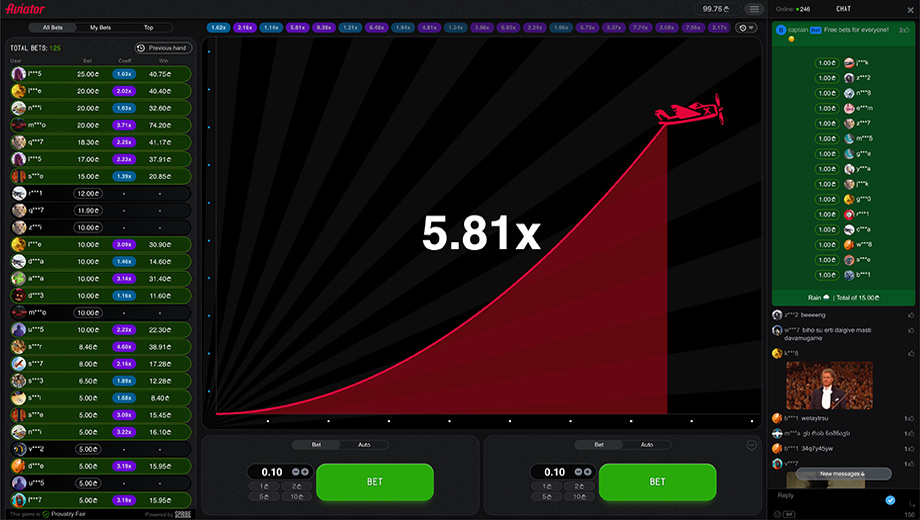
What Players Should Do Next: Practical Verification Steps
Players should verify three things before trusting any provably fair system: confirm the server seed commitment is published before gameplay, test that the hash computation matches the claimed formula, and use independent verification tools (such as open-source scripts or browser extensions) to audit outcomes. Never rely solely on the operator's own verification page.
For historical dashboard analysis, players should recognize that any apparent trend is likely random fluctuation. The safest approach is to treat each round as independent and focus on expected value and house edge calculations rather than pattern seeking. If a dashboard shows a "hot streak" starting to form, the mathematically correct response is to ignore it as noise.
Frequently Asked Questions
Can I predict future rounds by analyzing past outcomes on the dashboard?
No. Each round uses a unique SHA-512 hash computed from its own client and server seed combination, making it cryptographically independent of all previous rounds. Historical analysis can only describe what has already happened, not forecast future outcomes.
Do Pareto or Weibull distributions indicate that some outcomes are "due" to happen?
No. These distributions describe long-term aggregate behavior, not individual round probabilities. The probability of a specific multiplier in the next round remains constant regardless of past outcomes, because each round's hash is independent.
Is the combination of client seed and server seed truly unmanipulable by the operator?
Yes, under correct implementation. The operator commits to the server seed before the round begins by publishing its hash. Once the player provides the client seed, the operator cannot change the server seed without breaking the commitment. Independent verification ensures this process was followed.
How often do implementation failures actually occur in real provably fair systems?
Rarely among established operators, but documented cases exist. Audits have identified weak seed generation or missing commitment verification in smaller platforms. Players should always use independent verification tools and review the operator's seed commitment transparency.