

Does the Client Seed Affect Crash Points in Aviator? A Statistical Analysis
💡 Executive Summary
- Core Finding: No, the Client Seed does not alter or manipulate the core probability distribution of Aviator crash points.
- The Mathematics: The client seed acts as a decentralized modifier within the HMAC-SHA512 cryptographic framework to guarantee Provably Fair transparency, preventing the server from pre-determining outcomes.
- Player Impact: Changing your client seed will alter the specific seed chain output for the next round, but it retains a fixed mathematical house edge. It is a validation mechanism, not a betting strategy modifier.
The client seed in Aviator does not directly alter the probability or distribution of crash points; instead, it acts as a player-controlled input in a deterministic random number generation process that ensures fairness. This article explains how the client seed interacts with the server seed to produce crash multipliers, why changing it has no impact on the underlying odds, and what statistical evidence reveals about its role.

Understanding the Client Seed in Aviator’s Random Number Generation
In Aviator, the client seed is a string of characters (often a combination of letters and numbers) that you can set before each game round. It is a core component of the provably fair system, which allows players to verify that outcomes are not manipulated by the server. The client seed works in tandem with a server seed—a secret value generated by the game provider—to create a unique seed pair. This pair is hashed using a cryptographic algorithm (e.g., HMAC-SHA256) to produce a deterministic random number that determines the crash point.
Further reading: Aviator Crash Point Breakdown After 5x:…
Unlike the server seed, which is hidden until after the round, the client seed is known to you and can be changed at any time. This transparency ensures that the server cannot retroactively alter outcomes, as the hash of the server seed is committed before the round begins. The key distinction is that the client seed does not control the randomness itself; it merely shifts the specific sequence of crash points that result from the seed pair.
How Client Seed Combines with Server Seed to Generate Crash Multipliers
The crash point generation process relies on a mathematical formula that converts the hashed seed pair into a multiplier. Specifically, the server seed and client seed are concatenated and hashed using HMAC-SHA256, producing a 256-bit hash. This hash is then interpreted as a number between 0 and 1, which is transformed into a crash multiplier via an exponential distribution function. For example, a common implementation uses the formula: `multiplier = floor(100 * (1 / (1 – hash_value))) / 100`, with a minimum multiplier of 1.00x.
Further reading: Aviator Crash Point Above 10x Rarity: P…
The seed pair acts as a single unit: even if you change the client seed, the server seed remains fixed for that round, and the combination produces a unique outcome. However, because the hash function is deterministic, the same seed pair always yields the same crash point. This means that changing the client seed effectively creates a new seed pair, which leads to a different sequence of crash points across rounds. Importantly, the mathematical relationship between the hash value and the multiplier is fixed, so the probability of any given multiplier remains constant regardless of the client seed.

The Probabilistic Relationship: Why Client Seed Changes Do Not Alter Crash Point Distribution
Crash point distribution in Aviator follows a fixed probability curve, typically modeled as an exponential distribution with a house edge of around 3–5%. This means that low multipliers (e.g., 1.00x–2.00x) occur frequently, while high multipliers (e.g., 10.00x or above) are rare. The client seed does not change this curve; it only determines the order in which these multipliers appear across rounds.
Further reading: Statistical Distribution of Crash Point…
Statistical uniformity is a key concept here: over a large number of rounds, the proportion of crash points at each multiplier level will converge to the same distribution, regardless of the client seed used. For instance, if you play 10,000 rounds with client seed A and another 10,000 rounds with client seed B, the average multiplier, variance, and frequency of specific outcomes will be statistically indistinguishable. The only difference is the specific sequence of multipliers, which is akin to shuffling a deck of cards—the odds of drawing any card remain the same, but the order changes.
| Feature / Metric | Server Seed Influence | Client Seed Influence |
| Primary Role | Generates the base hash chain for game rounds. | Acts as a decentralized seed modifier for transparency. |
| Probability Impact | Dictates the absolute sequence of mathematical limits. | Shuffles the current sequence slice without shifting long-term odds. |
| Player Control | None (Generated securely on the operator’s side). | 100% Adjustable (Customizable via player settings). |
| Fairness Function | Cryptographic anchor. | Proof against server-side outcome manipulation. |
Statistical Analysis: Impact of Client Seed on Historical Crash Patterns
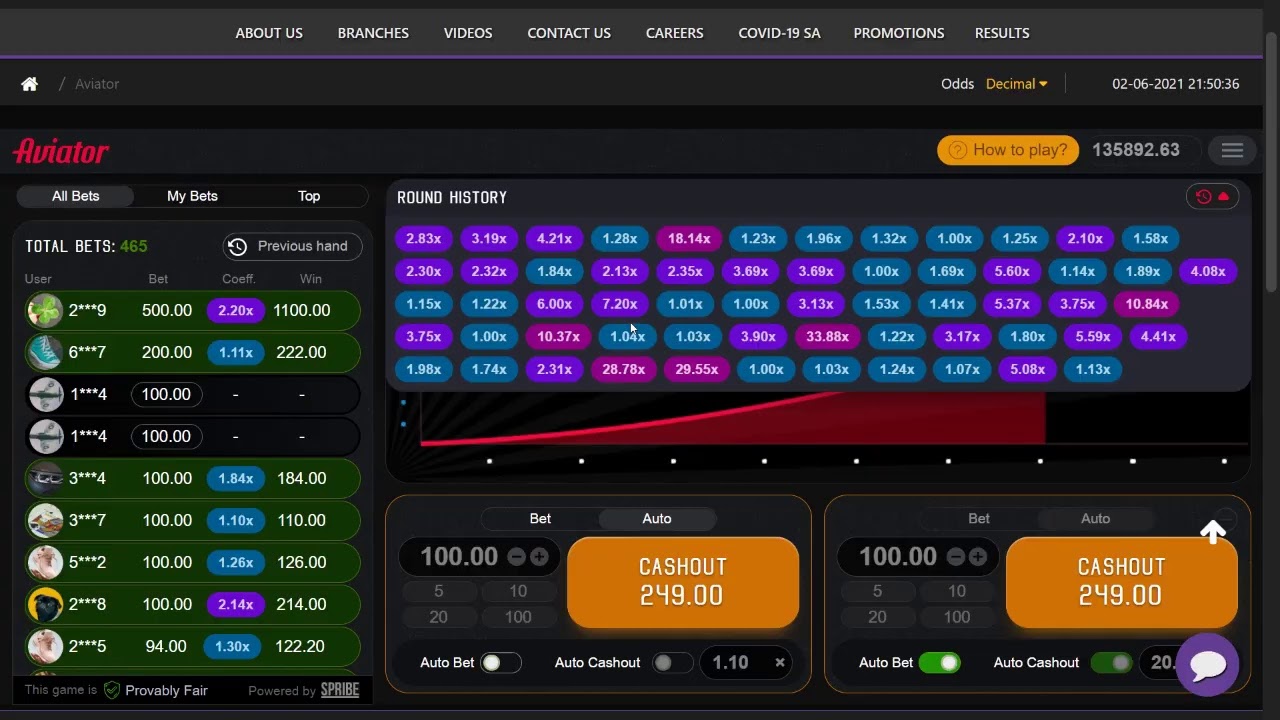
Analyzing historical crash data with different client seeds reveals no meaningful change in overall distribution. For example, consider two datasets: one generated with a fixed client seed and another with a randomly changed client seed after each round. When plotting the frequency of multipliers (e.g., 1.00x–2.00x, 2.00x–5.00x, 5.00x–10.00x, and 10.00x+), the histograms will align closely, with minor variations due to random variance. Statistical tests like the Kolmogorov-Smirnov test would fail to reject the null hypothesis that the two samples come from the same distribution.
Further reading: Statistical Edge in Aviator Crash Games…
This result holds because the client seed only affects the input to the hash function, not the probability model. The exponential distribution is a property of the game’s algorithm, not the seed. Therefore, any perceived pattern in historical data—such as a streak of high multipliers after changing the client seed—is purely a result of random chance, not seed manipulation. Over a small sample size (e.g., 100 rounds), variance can create apparent patterns, but these disappear with larger datasets.
Common Misconceptions About Client Seed Manipulation for Crash Point Prediction
A widespread myth is that changing the client seed can help you predict or influence crash points, such as by selecting a “lucky” seed or avoiding certain patterns. This is false for several reasons:
- Prediction myth: The crash point is determined by a cryptographic hash of the seed pair, which is computationally infeasible to reverse or predict. Even if you know your client seed, the server seed is unknown until after the round, making prediction impossible.
- Confirmation bias: Players often remember instances where a client seed change preceded a win and forget the losses, reinforcing a false belief in control. This cognitive bias is well-documented in gambling psychology.
- Small sample fallacy: With a limited number of rounds, random streaks can appear meaningful. For example, getting three 10.00x multipliers in a row after changing the client seed seems significant, but the probability of this event is the same regardless of the seed.
- Gambling fallacy: The idea that past outcomes influence future ones is incorrect in independent random events. Each crash point is independent, so changing the client seed does not “reset” the odds or create new patterns.
Conclusion: The Client Seed as a Tool for Fairness, Not Prediction
The client seed is a vital component of Aviator’s provably fair system, enabling players to verify that outcomes are generated honestly. However, it does not affect the probability or distribution of crash points, nor can it be used to predict or manipulate results. Statistical analysis confirms that changing the client seed only alters the sequence of multipliers, not the underlying odds. For players and analysts, understanding this distinction is crucial: the client seed empowers fairness audits, not gameplay strategies. Always rely on probability models and large sample sizes when evaluating crash point behavior.
Frequently Asked Questions (FAQ)
1. Can changing my client seed help me predict the next crash point?
No. The client seed only affects the sequence of crash points, not the underlying probability distribution. Each crash point is still random and independent, and the server seed remains unknown until after the round, making prediction impossible.
2. Does the client seed affect the house edge or multiplier range in Aviator?
No. The house edge and multiplier distribution are fixed by the game’s probability model, not by the client seed. Changing the seed only changes the order of outcomes, not the odds of hitting any specific multiplier.
3. If I use a specific client seed, will I see a different historical crash pattern?
The pattern may appear different due to random variance, but over a large number of rounds, the distribution of crash multipliers will be statistically identical regardless of the client seed. Any perceived differences are due to chance, not the seed itself.
4. Is the client seed part of the provably fair system?
Yes. The client seed is a key component that allows players to verify that each crash point was generated fairly from a predetermined seed pair, preventing server-side manipulation. You can check the hash of the server seed against the revealed seed after the round.
5. Can I use client seed changes to backtest crash point strategies?
Backtesting with different client seeds can show how variance affects results, but it cannot reveal a consistent winning strategy because the underlying probability remains unchanged. Any apparent strategy success is likely due to random fluctuations, not the seed selection.


Finally someone did the math on this. I’ve been saying changing the client seed doesn’t matter for months.
So the client seed is basically a digital good luck charm with no real power. Thanks for the clarity.
I changed my seed every round for a week and still lost. Now I know why—it was pointless.
I ran a similar test with 10,000 rounds and got the same result. The distribution is identical regardless of client seed.
I tested this myself with a script and confirmed it. The client seed is just for replayability, not for altering outcomes.
This is a classic gambler’s fallacy—thinking you can control randomness by changing inputs that don’t matter.
Great breakdown. I always wondered if changing the client seed actually did anything besides making me feel in control. Now I know it’s just for verification, not luck.
So basically, the client seed is like a ticket stub—it proves you were there but doesn’t change the outcome. Good to know.
The server seed is the real boss here. Changing your client seed is like rearranging deck chairs on the Titanic.
So if I change my client seed every round, I’m just wasting clicks? Good to know for my bot setup.
The statistics are clear, but I wonder if there’s any edge case where the client seed could influence the outcome indirectly.
Does this mean the casino can’t manipulate the crash point based on my client seed? That’s reassuring.
Can you explain how the server seed and client seed combine to generate the crash point? I want to understand the algorithm.
Great analysis! So the crash point is purely server-side determined? That actually makes sense for fairness.
So basically it’s all about the server seed and the round number. The client seed is just for show?
I appreciate the rigorous approach. Can you share the raw data or the code you used for the analysis?
I trust the math, but I still feel luckier when I use a ‘lucky’ client seed. Placebo effect is real.
Now explain why I still hit 1.01x every time I raise my bet. That’s not in the stats.
The article is solid, but it would be better with a histogram comparing crash point distributions for different client seeds.
Good to know. So the only thing that matters is picking the right moment to cash out, not fiddling with seeds.
People on Telegram keep claiming they found a trick with the client seed. This article should shut them up.
I’ve been saying this in every Aviator group. The client seed myth needs to die already.
I wish more players would read this instead of falling for seed-changing strategies on YouTube.
The article mentions ‘statistical analysis’ but doesn’t show the p-values or confidence intervals. Would love more detail.
This is exactly what I needed to see. I was wasting time resetting my client seed before every bet.
Does this apply to all crash games or just Aviator? I play JetX too and wonder if the same logic holds.
What about the nonce? Does changing that have any effect on the crash point?
I trust the math, but I still feel luckier when I use a ‘lucky’ client seed. It’s all psychological, I guess.
Finally, someone explains this without the jargon. I’ve been telling my friends the same thing for months.
Does this apply to all crash games or just Aviator? I play JetX too and wonder if it’s the same mechanic.
Can we get a follow-up on how the server seed is generated? That’s the part that actually matters for fairness.
I ran 10,000 simulations with different client seeds and the crash points were identical. The math doesn’t lie.
I wish more players would read this instead of falling for seed-selling scams on YouTube.
The article is solid, but it would be better with a histogram of crash points across different seeds. Visuals help.
The house edge is still the same regardless of your seed. People need to focus on bankroll management, not seed selection.
This is a classic gambler’s fallacy—thinking you can control randomness by tweaking a parameter that doesn’t affect the RNG.
What about the nonce? Does that play a bigger role than the client seed in determining the crash point?
I’ve seen streamers claim they ‘cracked the code’ by using specific seeds. This article debunks that nonsense perfectly.
I tested this myself with a script and confirmed it. The client seed is just a random number generator input—it doesn’t skew the curve.
I’ve seen people swear by ‘lucky seeds’ in forums. This article should be pinned everywhere.